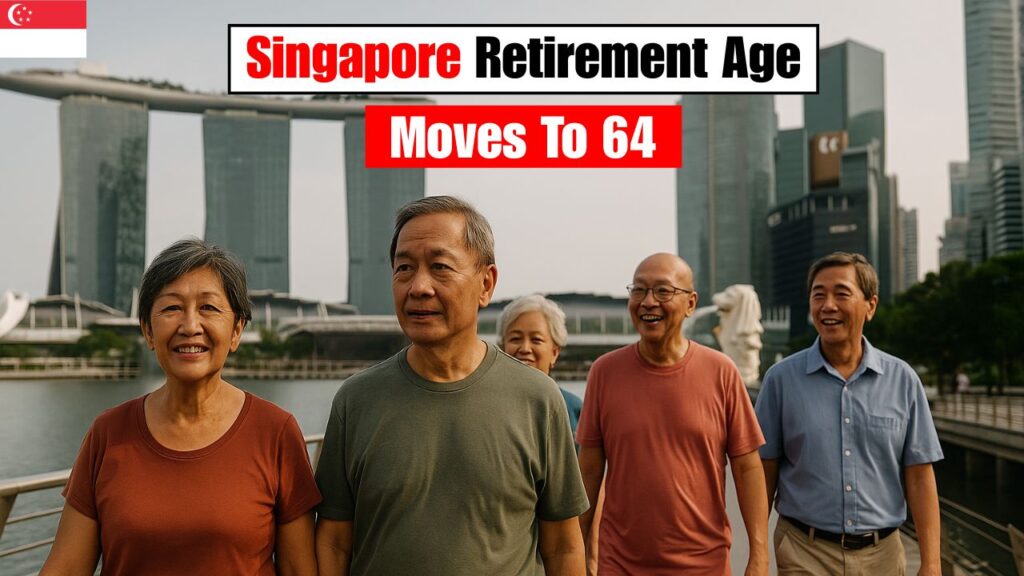
If you are in your early 60s right now this change matters to you. Starting December 1 2025, Singapore’s statutory retirement age moves from 63 to 64. This means one additional year of work and one more year of CPF contributions before you retire. It might seem like a minor adjustment at first. However, that single year can result in tens of thousands of extra dollars & better medical coverage. It also allows for a smoother shift into your later years. For many workers this is more than just a policy change. It represents a significant financial opportunity.
Why Singapore Is Raising the Retirement Age
Singapore is not the only country doing this. Nations worldwide are raising the retirement age because they face a genuine problem. People in Singapore now live beyond 83 years on average. At the same time the number of young people joining the workforce keeps dropping. This creates a major problem where too few workers must support too many retirees. Rather than letting the workforce shrink Singapore has chosen to keep experienced workers employed for longer. This approach reduces how much retirees need to rely on government support over time. It also helps seniors build up more savings in their CPF accounts. The economy stays productive without facing sudden disruptions. The government plans to raise the retirement age to 65 by 2030. The current increase to 64 in 2025 is just one step in a gradual process. This slow approach means both workers & companies can adjust without facing sudden changes.

Who Is Directly Affected by the Singapore Retirement Age 2025?
This update applies to: Employees born on or after December 1 1962 Workers who are still in active employment when the rule kicks in If you fall into this group your statutory retirement age becomes 64 & your re-employment age extends to 69. That means your employer is legally required to offer re-employment or provide structured job assistance if re-employment isn’t possible. There are penalties for companies that ignore this with fines that can go up to S$10,000 per violation.
What You Actually Gain by Working One Extra Year
– Extra employee and employer CPF contributions
 Singapore Workfare 2025 — S$3,267 Payout Structure Explained for Employees and Self Employed
– Higher balances in Special and Retirement Accounts
– Stronger monthly payouts when CPF LIFE begins
What Employers Are Now Required to Do
The Workplace Must Change for Everyone This shift affects more than just employees. Companies need to adapt as well. Employers must now focus on several key areas. They should redesign their offices and workspaces to include proper ergonomic support. Age discrimination needs to be removed from both hiring practices and how jobs are structured. Training programs and skill development opportunities should be made available specifically for older workers. The government has stepped in to help with this transition. Financial grants and incentives are now available for companies that commit to age-inclusive hiring practices. Additional support is provided to help businesses redesign roles that are more suitable and accessible for senior employees. These changes represent a fundamental shift in how we think about aging workers and their place in modern business. Companies that embrace these updates will be better positioned to benefit from the experience and knowledge that mature employees bring to the workplace.
How to Prepare If You’re Near Retirement
If this policy affects you or will affect you soon, here are some steps you should take right away. First, check your CPF balance through the CPF app to know exactly where you stand financially. Then review your CPF LIFE projections to understand what monthly payouts you can expect during retirement. Consider using your SkillsFuture credits to learn new skills that might help you stay employable longer. Have an early conversation with your employer about your plans for continuing work beyond the current retirement age. Most importantly, talk with your family members about when you actually plan to retire & what that means for everyone involved. Waiting until you turn 64 to start thinking about these issues creates unnecessary risk. When you plan ahead you can turn this rule change into something that works in your favor instead of against you.
What This Change Says About Singapore’s Future
Raising the retirement age to 64 in 2025 does not mean forcing people to work forever. It creates more options for workers to decide what suits them best. People who are healthy can choose to continue working. Those who want to retire later will have more time to build up their savings. Others can move into flexible roles that let them transition gradually into retirement. Singapore is using this approach to match longer lifespans with financial security and personal dignity. When people live longer they should enjoy those extra years instead of worrying about money. The goal is to make extended lifespans an advantage rather than a burden. This policy recognizes that not everyone wants to stop working at the same age. Some people enjoy their careers and want to stay active. Others need additional income to support themselves comfortably. The flexibility allows individuals to make choices based on their own health & financial situation. By adjusting the retirement age gradually Singapore gives workers time to plan ahead. They can prepare financially and think about what kind of lifestyle they want in their later years. The system aims to support people through different stages of life while keeping the economy stable.