Australia has recently rolled out a new generation of AI traffic cameras aimed at improving road safety nationwide. Starting December 2025, these advanced cameras are triggering $415 rolling-red fines even in situations where drivers have not technically crossed the red light. The move has stirred debate among motorists, safety advocates, and lawmakers, raising concerns about fairness and penalty enforcement. With high-tech monitoring now active in multiple states, Australian drivers are urged to stay vigilant and understand how these automated systems function to avoid unexpected penalties while navigating urban and suburban roads.
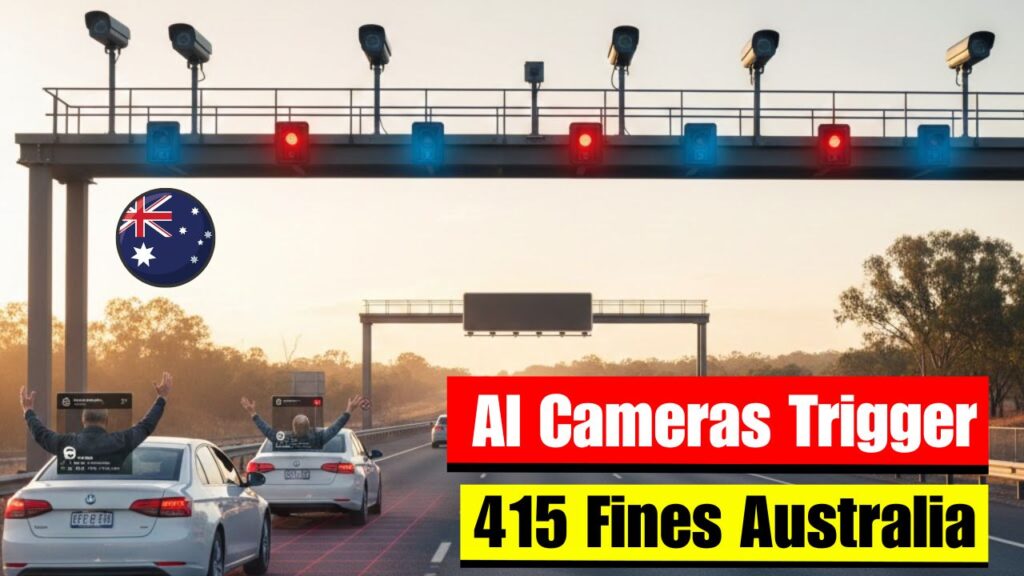
AI Traffic Camera Functionality in Australia
The new AI monitoring systems use smart sensors and cameras to detect vehicle movement at intersections. Unlike traditional cameras, these devices track the vehicle’s stopping distance and traffic light timing, which means even partial crossings can trigger fines. Authorities claim that the automatic detection improves safety and reduces accidents, particularly in high-risk zones. However, drivers have reported confusing scenarios where fines were issued despite timely stops, sparking discussion about camera calibration accuracy and the need for public awareness campaigns across Australia.

Impact on Australian Drivers and Compliance
The implementation of rolling-red fines has led to increased attention from motorists, with many seeking legal advice options after receiving tickets. Insurance companies and driving authorities recommend that drivers review their intersection behavior and ensure vehicle sensors alignment. The fines are not only financial but can also affect driving records if repeated violations occur. Experts suggest that understanding AI detection limits and adhering to precise stopping distances can help mitigate unexpected penalties, ensuring compliance with new Australian traffic regulations.
Government Response and Road Safety Goals
Australian road safety departments emphasize that AI traffic enforcement is part of a broader strategy to reduce accidents and fatalities. Officials highlight real-time monitoring and data-driven decisions as critical factors in improving compliance. Public education programs are being introduced to explain the fines process and how drivers can contest errors. The government assures that technology audits are conducted regularly to maintain system accuracy, while continuing to encourage safe driving practices nationwide.

Summary and Key Takeaways
Australia’s new AI traffic cameras have introduced a paradigm shift in traffic enforcement, targeting rolling-red violations with $415 fines. While these systems aim to enhance road safety standards, they also challenge drivers to adjust to high-tech monitoring and strict compliance. Motorists are advised to familiarize themselves with intersection rules, maintain proper stopping distances, and monitor notifications to avoid unnecessary fines. Overall, the program reflects Australia’s commitment to reducing accident rates while balancing driver accountability and fairness.
| Camera Type | Fine Amount | Trigger Condition | Location |
|---|---|---|---|
| AI Rolling-Red | $415 | Partial or full crossing | Urban intersections |
| Standard Red-Light | $250 | Full crossing | Suburban intersections |
| High-Risk Zone AI | $500 | Vehicle movement violation | School zones |
| Speed + Red AI | $600 | Speeding through red | Highways |
Frequently Asked Questions (FAQs)
1. What is the new AI camera fine?
The fine is $415 for rolling-red light violations.
2. Can I be fined without crossing fully?
Yes, partial crossing can trigger the AI system.
3. Where are these cameras installed?
They are installed at urban intersections and high-risk zones.
4. How can drivers avoid penalties?
Maintain proper stopping distances and follow light signals carefully.